The Quietest Moment Is Often the Most Revealing
There is a moment in every high-stakes negotiation that most leaders fear.
The offer has been made. The numbers are clear. The conditions are set.
And then — silence.
No objections. No counteroffer. No reassurance.
Just a quiet, uncomfortable pause.
This is the moment where negotiations are won or lost — not because of strategy or pricing, yet because of who can stay grounded when the room goes quiet.
Most CEOs understand this intellectually.
Yet under pressure, silence feels dangerous.
So they speak.
They explain. They justify. They soften. They negotiate against themselves.
And in doing so, they unknowingly surrender leverage.
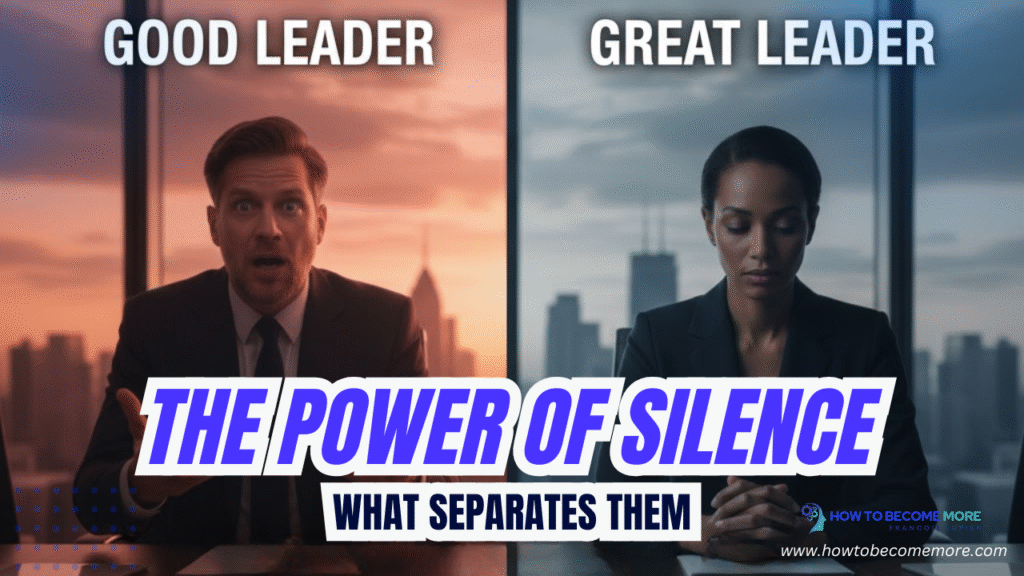
Great leaders do something different.
They stay silent — not passively, yet deliberately.
Why Silence Feels So Difficult at the Top

Silence isn’t difficult because it’s empty. It’s difficult because it exposes what’s happening inside us.
In negotiations, silence triggers uncertainty — and uncertainty activates the nervous system.
The mind starts racing:
- They don’t like the offer
- I pushed too hard
- I should clarify
- I should add value
This internal noise has nothing to do with the deal.
It’s the body reacting to tension.
Most leaders have never been trained to stay present in this moment. They’ve been trained to move fast, decide quickly, and reduce friction.
Silence feels like friction.
Yet silence is not a problem to solve. It’s a state to manage.
This is where leadership maturity reveals itself.
The Real Cost of Filling the Silence
I’ve watched this pattern repeat itself with highly capable CEOs.
They enter negotiations prepared. They make strong offers. They hold solid positions.
Then the room goes quiet.
And within seconds, they start talking again.
Not because the deal requires it — yet because the silence feels intolerable.
Here’s the truth most leaders never hear:
You didn’t lose leverage because of the offer. You lost it because of what you did after the offer.
Silence is information.
When you rush to fill it, you send a signal — often unconsciously — that you are uncertain, anxious, or eager to close.
In high-stakes environments, those signals matter.
Great leaders don’t remove tension. They hold it.
Level One: Silence as Tactical Leverage

At the most practical level, silence is a negotiation tool.
After stating your price, condition, or expectation, great leaders stop talking and count seven seconds internally.
Not three. Not one. Seven.
Those seconds matter.
Silence creates a psychological vacuum.
Human beings are conditioned to resolve discomfort. When silence stretches, the other party often fills it by:
- clarifying concerns
- revealing hidden objections
- offering concessions
- sharing additional information
This is not manipulation. It is patience.
And patience shifts leverage.
Silence does not pressure aggressively. It removes the emotional cushion protecting the other side.
Level Two: Silence as a Reflective Shield

The deeper power of silence has nothing to do with the other party.
It has everything to do with you.
Under pressure, the brain moves into fight-or-flight. In this state, leaders are more likely to:
- agree too quickly
- over-promise
- make emotional concessions
- commit to terms they later regret
Silence interrupts this reaction.
A pause allows the nervous system to regulate. It shifts the brain from reactive mode to reflective mode.
Instead of responding emotionally, you regain access to judgment, discernment, and strategy.
Silence doesn’t delay decisions. It improves decision quality.
This is calm leadership under pressure.
Level Three: Silence as Executive Presence

At its highest level, silence becomes authority.
The difference between uncertain silence and powerful silence is intent.
Great leaders anchor silence with clarity.
When challenged, they say:
“Give me a moment to think about that.”
Then they pause.
They look down. They look away. They breathe.
No apology. No explanation. No rush.
Only leaders secure in their position are comfortable making others wait.
This is executive presence.
Anchored silence communicates:
- confidence
- control
- discernment
- emotional stability
It tells the room: this decision matters.
Why Silence Builds Trust Instead of Breaking It
Many CEOs fear silence will damage rapport or signal uncertainty.
In reality, silence often does the opposite.
Silence signals thoughtfulness. It shows consideration rather than reaction.
In negotiations, people trust leaders who appear measured, not rushed.
Speed can look decisive — yet often feels careless.
Silence communicates respect for the moment and the people involved.
Over time, it builds credibility.
Silence Beyond Negotiation
The discipline of silence extends beyond the deal table.
Great leaders use silence in:
- board meetings
- performance discussions
- crisis moments
- strategic planning
- difficult conversations
Before responding. Before deciding. Before reacting.
Silence creates space. And space allows leadership to emerge.
In a world addicted to speed, the leader who pauses stands out.
A Simple Practice to Strengthen Your Presence
To integrate this immediately, start small.
For the next 24 hours, apply the 3-Second Rule.
Before answering any question — from your team, your board, or your clients — wait three full seconds.
Notice the shift.
Your words carry more weight. Your tone becomes calmer. Your presence feels steadier.
Silence doesn’t weaken your voice. It amplifies it.
The Deeper Truth About Power
True power is not volume, dominance, or speed.
It is grounded control.
Silence is not inaction. It is internal action before external expression.
Leaders who master silence negotiate better deals, make cleaner decisions, and project confidence without force.
They don’t rush to fill the void.
They know the void works for them.
A Closing Reflection
In high-stakes negotiations, silence is not the risk.
Reacting is.
The leader who stays calm in quiet moments wins — not by overpowering the room, yet by steadying it.
Silence is not passive. It is deliberate. It is disciplined. It is powerful.
I work with CEOs and top executives through confidential conversations that sharpen clarity, strategy, and leadership presence. – I Promise Progress –
If this resonates, you know where to find me.