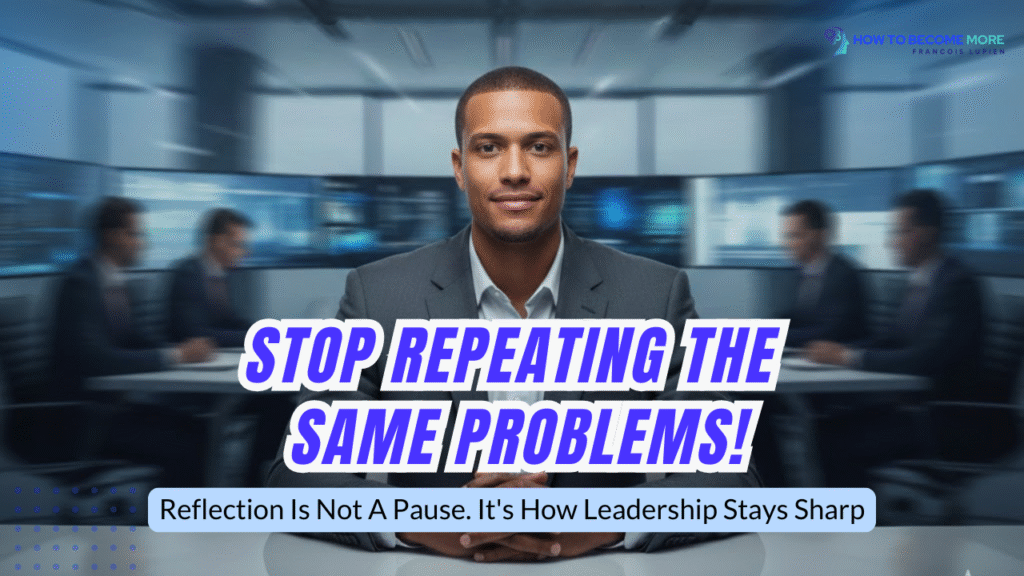
Why the Most Effective Leaders Reflect Differently Under Pressure
Reflection Is Not a Pause From Leadership
It’s How Leadership Stays Sharp
There is a quiet discipline practiced by the most effective CEOs.
It doesn’t show up on calendars. It isn’t taught in MBA programs. And it rarely appears in leadership conversations.
Reflection.
Not the kind associated with introspection or self-analysis — but strategic reflection, used deliberately to sharpen decisions, regulate pressure, and prevent the slow erosion of leadership effectiveness.
Most leaders misunderstand reflection.
And that misunderstanding is costly.
Why High-Performing Leaders Resist Reflection
For many executives, reflection feels inefficient.
It sounds like:
- slowing down
- revisiting decisions already made
- questioning momentum
- creating unnecessary friction
So leaders stay in motion.
They move from meeting to meeting. From decision to decision. From pressure to pressure.
Over time, something subtle happens.
The same issues repeat. The same tensions resurface. The same conversations cycle — just with new faces and higher stakes.
This is not bad leadership.
It is unexamined leadership.
Reflection, when skipped, doesn’t eliminate problems.
It recycles them.
Reflection Is Not Looking Back

It’s Recalibrating Forward
Elite CEOs don’t reflect to analyze their emotions.
They reflect to answer one critical question:
“Is the way I’m operating still producing the outcomes I want?”
Reflection is a calibration mechanism.
It allows leaders to:
- notice when pressure is distorting judgment
- detect blind spots before they harden
- interrupt patterns before they become culture
- adjust course before costs compound
Without reflection, leadership becomes reactive. With reflection, leadership becomes intentional.
This is why reflection is not an event.
It is a discipline.
Why Pressure Makes Reflection More Valuable — and More Rare

There is a paradox at the top.
The more pressure a leader experiences, the more valuable reflection becomes — and the more likely it is to be skipped.
Under pressure, leaders default to execution.
They solve. They push. They decide.
Reflection feels like a luxury when stakes are high.
Yet pressure narrows perception.
It amplifies urgency. It reduces perspective. It favors short-term relief over long-term coherence.
Reflection under pressure does not remove responsibility.
It stabilizes authority.
It ensures decisions are made from clarity rather than compression.
The Hidden Cost of Unreflected Leadership
When reflection is consistently avoided, leaders often experience:
- repeated conflicts with different people
- decisions that feel right yet underperform
- teams that hesitate under pressure
- growing internal fatigue without obvious cause
These are not isolated issues.
They are feedback signals.
Reflection is how leaders turn feedback into intelligence.
Without it, signals are ignored — until they become problems.
The Three Levels of Leadership Reflection
Top CEOs don’t reflect casually.
They reflect systematically.
Level 1: Event Reflection
What just happened?

After any high-impact moment — a decision, meeting, or conflict — ask:
- What was the outcome?
- What worked?
- What didn’t?
No emotion. No justification. No storytelling.
Just facts.
This keeps leaders grounded in reality rather than narrative.
Level 2: State Reflection
What state was I in?

Ask:
- Was I calm or rushed?
- Clear or pressured?
- Open or defensive?
Most leadership outcomes are influenced less by strategy and more by state.
The same decision made from calm produces a different result than one made from urgency.
State reflection reveals when pressure — not logic — is driving behavior.
Level 3: Pattern Reflection
Where does this repeat?

Ask:
- Where else does this show up?
- With whom does it repeat?
- What does it cost over time?
This is how leaders stop managing symptoms and start correcting systemic issues.
Pattern reflection changes trajectory.
It prevents small issues from becoming permanent features of leadership culture.
Why Reflection Prevents Leadership Drift
Leadership drift is subtle.
It doesn’t announce itself.
It shows up quietly through:
- recurring frustrations
- familiar tensions
- persistent energy drain
- declining satisfaction despite success
Without reflection, leaders normalize these signals.
They adapt to misalignment instead of correcting it.
Reflection interrupts drift.
It asks: “Is this still aligned — or just familiar?”
That distinction is everything.
Reflection as a Decision-Quality Multiplier
One of the least discussed benefits of reflection is its impact on decision quality.
Reflection:
- reduces emotional carryover
- separates signal from noise
- sharpens priorities
- restores perspective
It allows leaders to respond rather than react.
Great CEOs don’t wait for clarity to appear.
They create it.
Why Reflection Strengthens Executive Presence
Leaders who reflect regularly:
- speak with greater clarity
- react less defensively
- maintain steadier presence
- inspire deeper trust
Not because they think more — but because they react less.
Presence is always inside-out.
Reflection stabilizes the internal environment from which leadership emerges.
A Simple 5-Minute Leadership Discipline
Reflection does not require retreats, journals, or long analysis.
A five-minute daily practice is enough.
At the end of each day, ask:
- What decision today mattered most?
- What state was I in when I made it?
- What will I adjust tomorrow — slightly — to improve the outcome?
That’s it.
No overthinking. No self-criticism.
Just calibration.
Because leadership reflection isn’t about thinking more.
It’s about thinking cleaner.
Reflection Is a Discipline, Not a Mood
The most effective CEOs don’t reflect when they feel like it.
They reflect because it is how they operate.
They don’t wait for failure to reflect. They reflect to avoid failure.
Reflection is not a pause from leadership.
It is how leadership stays sharp over time.
The Long-Term Advantage of Reflective Leadership
When reflection becomes a discipline:
- decisions improve
- pressure becomes manageable
- patterns dissolve
- leadership becomes lighter, not heavier
Not because the work disappears — but because the leader operates with alignment instead of friction.
This is sustainable leadership.
Final Reflection
Great leaders don’t lead harder.
They lead cleaner.
Reflection isn’t about the past. It’s about alignment — right now.
It sharpens decisions. It stabilizes presence. It prevents drift.
Reflection isn’t what slows leaders down.
It’s what keeps them from quietly losing their edge.
About My Work
I work with CEOs and top executives through confidential conversations that sharpen clarity, strategy, and leadership presence.
– I Promise Progress –
If this resonates, you know where to find me.